The name
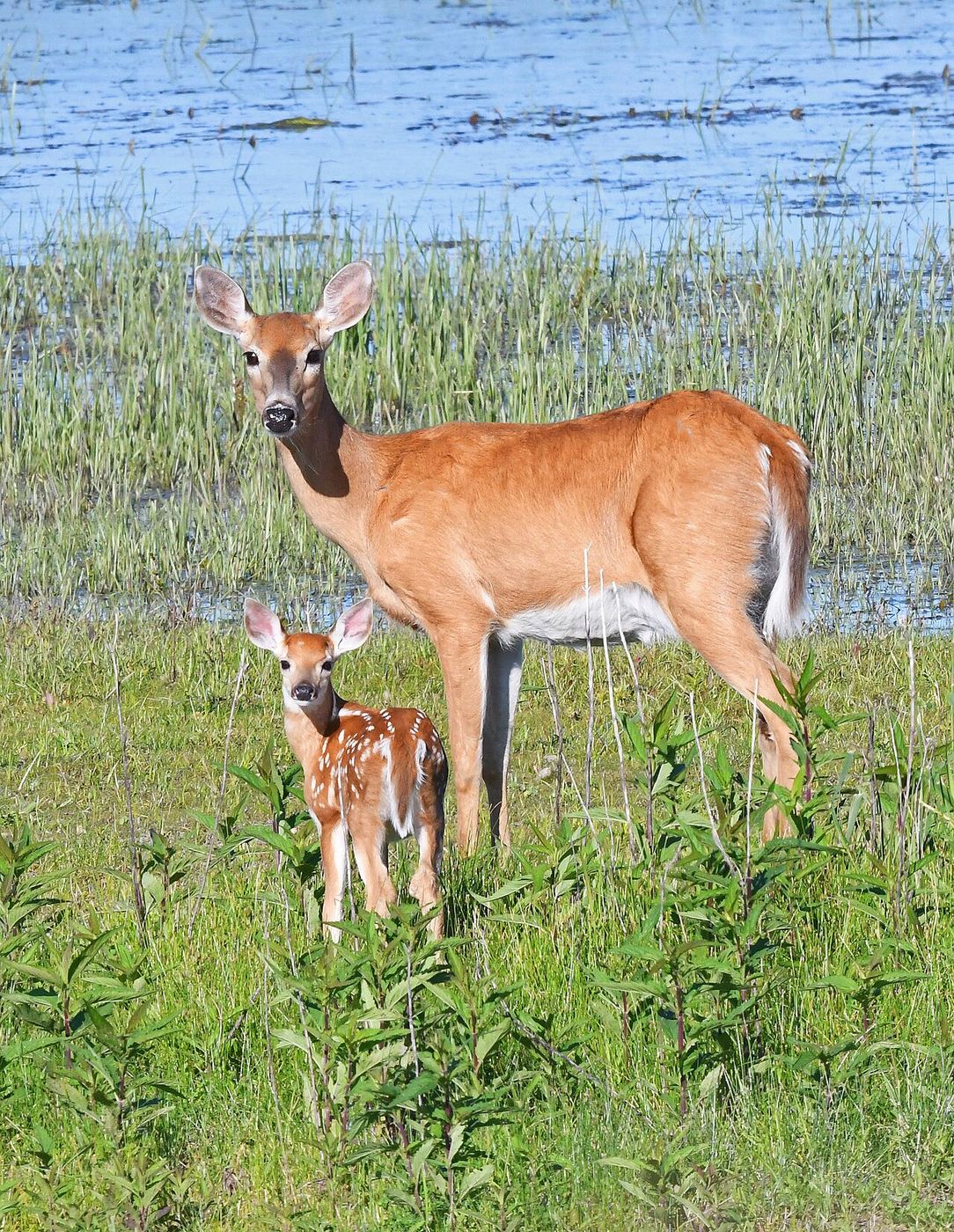
The scientific name is Odocoileus virginianus. The everyday name comes from the tail. The underside is white. When a deer is alarmed, the tail lifts and that white flag shows against the brush.
People also say white-tailed deer. On this site both names mean the same animal.
The animal
A whitetail is a ruminant. Food goes into a chambered stomach, and the deer brings the cud back up to chew it again. That is why a visit to the trough can be short, and the chewing can finish later in the trees.
Adults stand a little under a metre at the shoulder. Northern whitetails tend to be heavier than southern ones. Does are usually smaller than bucks of the same age. Coat color shifts from a redder summer coat to a thicker gray-brown winter coat. By the time this cam opens in November, the winter coat is in.
Where they live
Whitetails live across a wide part of North America, including much of southern and central Canada, and farther south through the United States, Mexico, and parts of Central America. They have also been introduced in other countries.
They use woods, field edges, river bottoms, and the brushy places between. This wiki does not name a town, a province, or a map pin for the cam.
A year in outline
Fawns are born in late spring. Antlers grow on bucks through summer under velvet. The breeding season, often called the rut, peaks in November across much of the northern range. Winter is for conserving energy. Antlers drop, and spring starts the cycle again.
The Deer Streams season covers only the cold half of that year: November 1 to March 31.
.jpg)