How you tell
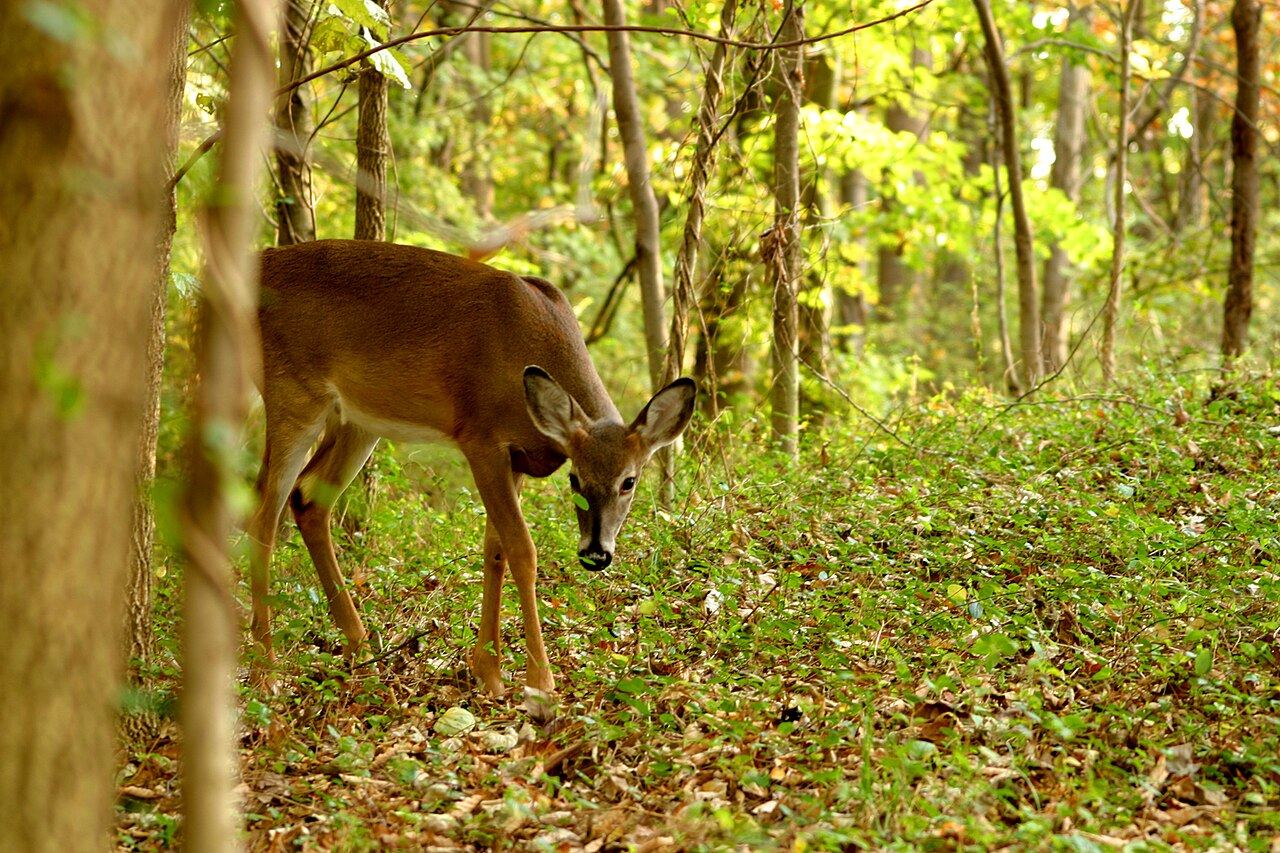
Does do not grow antlers in an ordinary year. An antlered doe is rare and usually tied to a hormone quirk. No antlers does not prove the deer is female in winter, because bucks drop theirs. In November, a deer with no antlers, a finer neck, and young at her side is the usual picture of a doe.
Family
Whitetail society is built around does. A group may be a mother, her fawns, and a yearling daughter. Buck fawns leave that circle as they mature. Doe fawns often stay nearby.
Older does know the trails. Younger deer copy the pause, the approach, and the exit. If the lead doe flags her tail and goes, the rest usually follow.
The year she carries
A doe can breed in her first autumn, though many do not conceive until they are older. Gestation is about 200 days, a little over six months. Births cluster in late spring. One fawn is common for a first-time mother. Two is common later. Three happens when food has been good.
By the time this cam is live, those fawns are months old. You will not see a birth on a November trough.

.jpg)