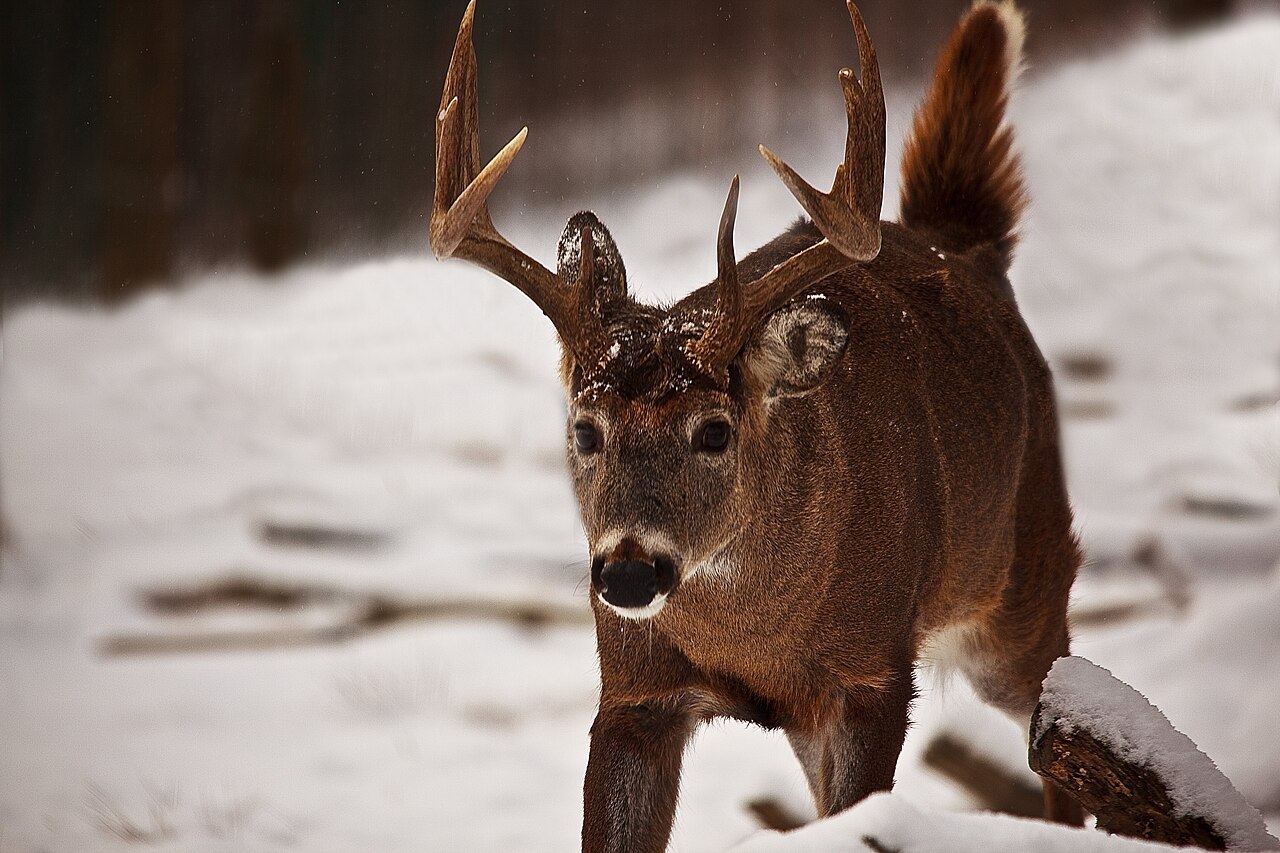
A visit
Someone is usually first. Others wait at the edge, push in, or circle. Ears pin. A head lowers. The first deer slides off and another takes the oats. Then the clearing can sit empty for a long while.
A visit might be a minute. It might be most of an hour. Night visits are often the longer ones. The beam is the only light they have to ignore, and the woods are quiet.
Signals
The white tail is the long-distance alarm. A snort is the close one: a sharp blow through the nose that says the deer is unsure. A grunt is softer and more social, used more by bucks in the breeding season. A fawn bleat is a contact call for its mother.
Foot stomps happen when a deer wants a second look. If the answer is still wrong, the flag goes up and the trough is abandoned.
Order
Food makes a pecking order visible. A buck may hold the trough. A doe may shove a yearling off. A fawn waits and slips back in. Size is not the only rule. Persistence counts, and so does who arrived with allies.
This is not aggression for show. It is a small pile of oats and more mouths than fit at once.
Daily rhythm
Whitetails are often busiest at dawn and dusk. A feeder changes that. On this cam they also come in full daylight and in the middle of the night. Hunger, weather, and how quiet the clearing is all move the clock. There is no dinner bell.