How you tell
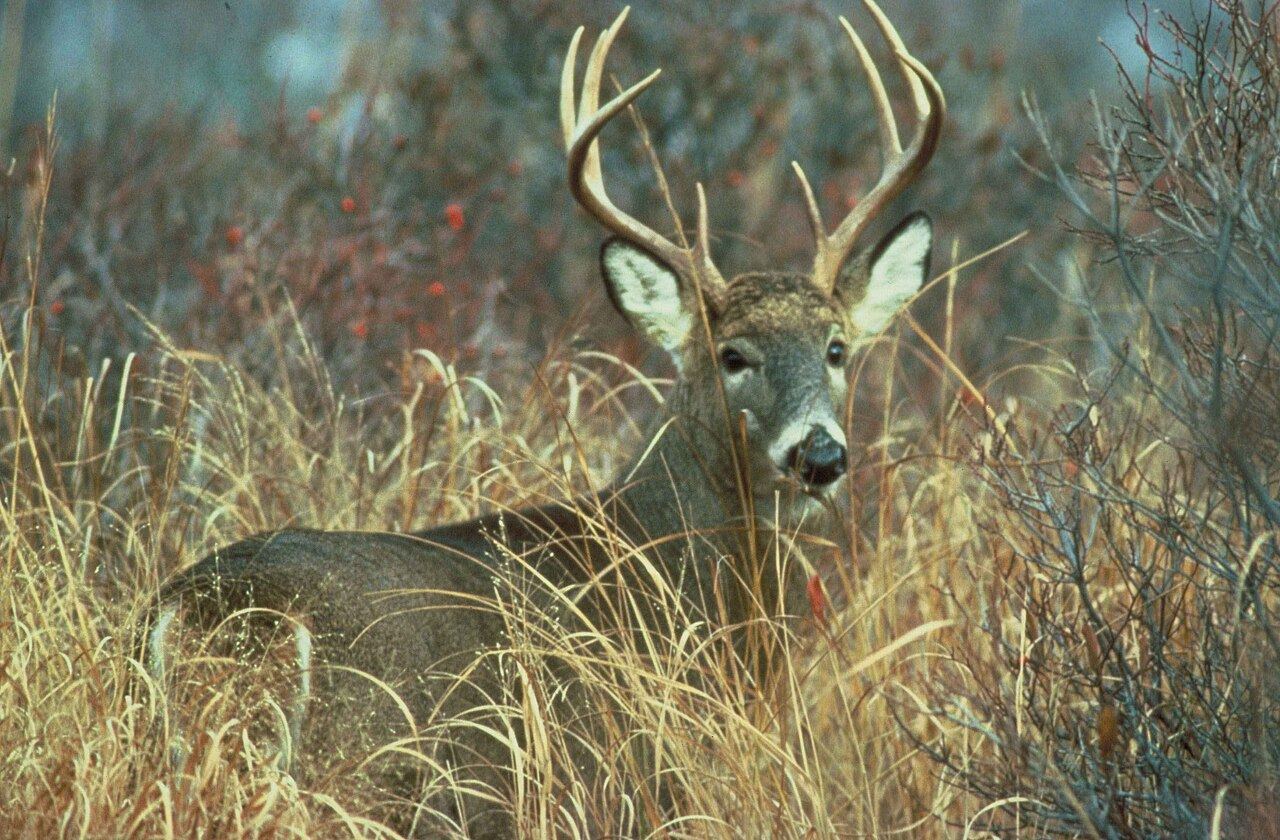
In this season the antlers are the obvious mark. A buck may also look thicker through the neck as the breeding season nears. Body size alone is a poor test. A young buck can be smaller than a mature doe, and a heavy doe can look broad from the camera’s side.
After the antlers drop, sex is harder to see. The pedicles, the bony bases on the skull, can still show as two bumps. Behavior helps more than a single frame.
The rut
The rut is the breeding season. It is not a contest and not a hunt. In northern country, including Canada, the peak often falls in November, which is when this cam opens.
Before the peak, bucks rub antlers on saplings and make scrapes on the ground. Those signs are about scent and presence. During the peak a buck travels more, eats in shorter bursts, and checks does. Afterward he is often worn down and more interested in the trough again.
Company
In summer, bucks often travel in loose bachelor groups. By November those groups have usually broken up. A buck on camera may be alone, or he may shadow a doe and her young.
Sparring is common. Two bucks lock antlers and push. Most of it is a test, not a fight to the finish. Serious injuries happen, but they are the exception. The camera stays off to the side either way.