Velvet
Antlers grow from pedicles, two bony bases on the skull. While they grow, mostly in spring and summer, they are covered in velvet. Velvet is skin. It carries blood to the growing bone.
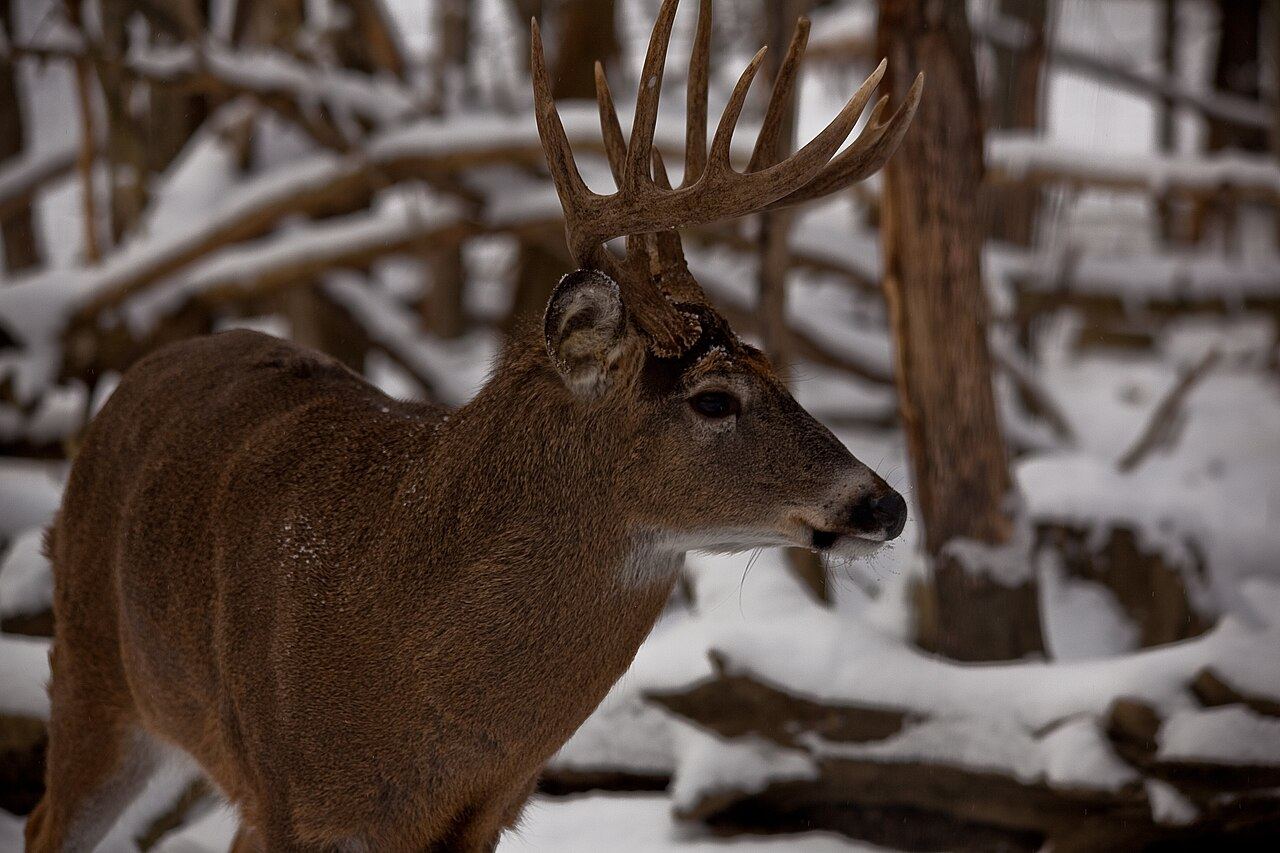
Lengthening days and then rising testosterone finish the growth. The velvet dries and the buck rubs it off on shrubs, usually in late summer. By November the antlers are hard, pale or stained, and polished at the tips. That is hard horn. The word “horn” stuck. The material is still bone.
The drop
After the breeding season, testosterone falls. The bone at the base weakens, and the antlers cast off. In the north this often happens from December into March. One side can drop before the other.
The dropped antler is dead bone. Mice and squirrels chew them for the minerals. A new set starts the next spring. It is not a photocopy of the last one.
What changes the shape
Age, food, injury, and the individual all change a rack. A young buck may carry spikes or a small basket. A prime-aged buck often carries more points. An old buck can grow a smaller set again. Poor food in the growing months shows up in the antler.
Points are not a birthday cake. You cannot count the tines and know the year. The cam is a place to watch the cycle, not a place to judge it.