Smell
Scent is the sense they bet on. A deer can read who passed, how long ago, and whether a doe is in breeding condition, all from the ground and the air. Glands on the legs, the forehead, and between the toes leave those messages.
Wind matters. A deer often approaches from the downwind side of a clearing, or pauses until the air tells it enough.
Hearing
The ears swivel on their own. A deer can point one ear at the trough and one at the trees. Rustles, voices, and mechanical clicks all register. A foot stomp is as much a way to provoke a sound from a hidden animal as it is a warning.
Sight
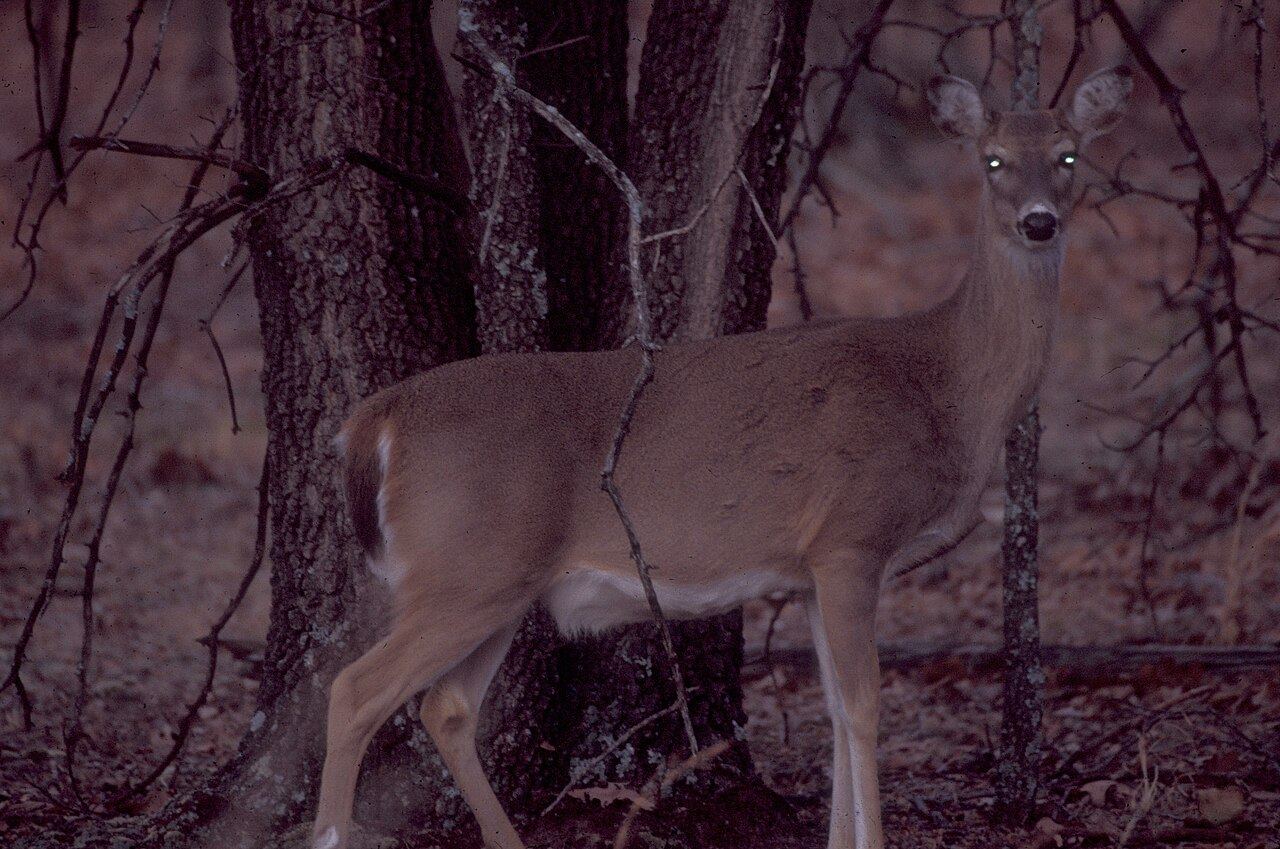
Whitetail eyes are built for dim light and for movement. A reflective layer behind the retina, the tapetum, bounces light back through the eye. That is the eyeshine in the night picture.
Their color vision is limited. They pick up blues and yellows more than reds. A still object can disappear into the background. A moving one rarely does. They do not study the world the way a person does. They ask whether anything changed.
The flag
The white underside of the tail is a visual shout. The rest of the body can vanish into gray brush. The flag does not. Other deer read it and move. So does anyone watching the cam.

.jpg)