Spots
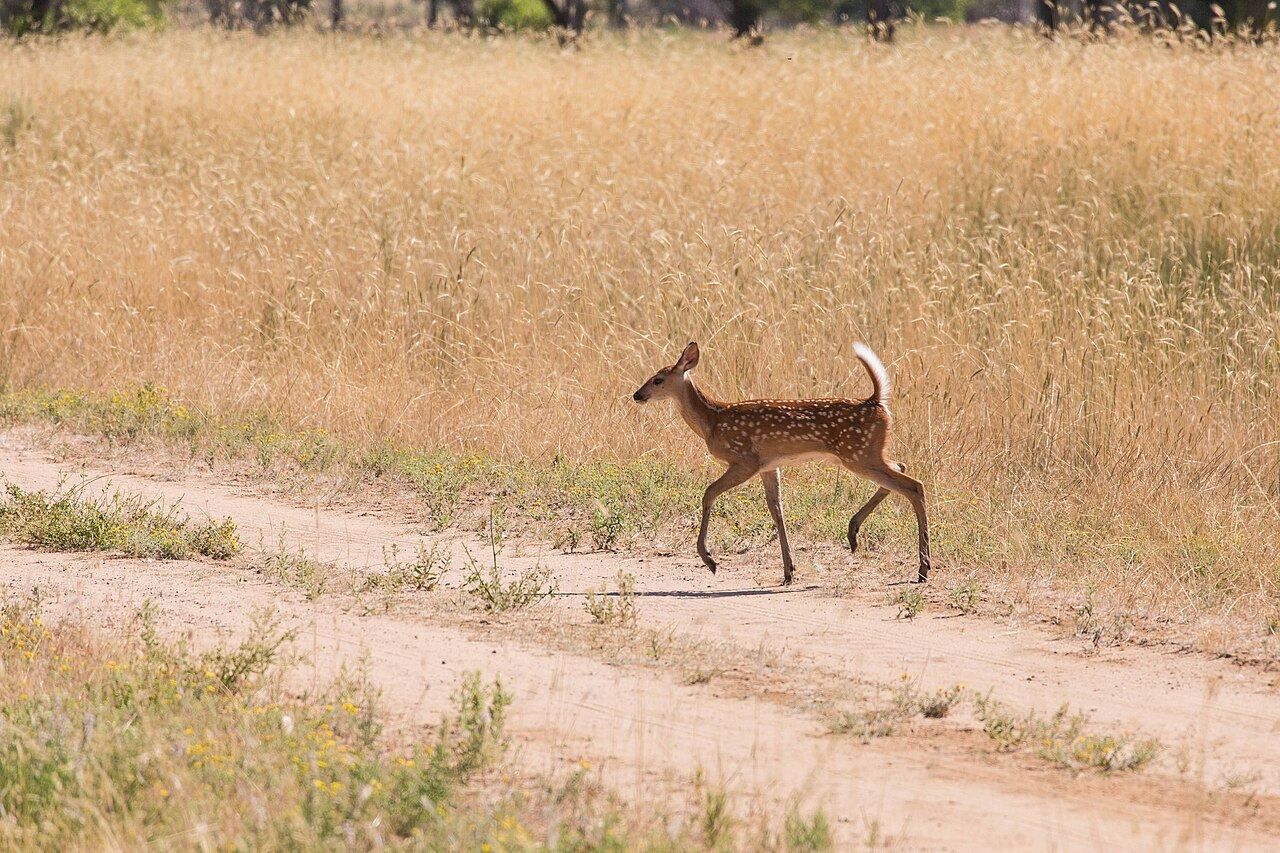
Newborns wear a reddish coat with white spots. The spots break up their outline when they lie still in dappled cover. A fawn’s first defense is to hide, not to run.
Those spots fade as the winter coat grows in, often by three or four months of age. This cam opens November 1. Spotted newborns are a spring sight. Hoping for spots in this season is hoping for the wrong month.
Growing up
A fawn stands and nurses soon after birth. Within weeks it is tasting plants. By autumn it is chewing the same sorts of food as the adults, including the oats at a trough.
Doe fawns often stay with their mother through the first winter. Buck fawns stay too, then range wider as their first antlers start. The little bumps of a button buck can show late in his first year. They are not a full rack.
At the trough
Fawns wait, sneak, and get bumped aside. An adult doe or a buck will take the best spot. The fawn slides back in when there is room. That pushing is ordinary feeder manners, not a crisis.
They are still learning what is worth a startle. A flag from an adult is usually enough to empty the clearing.

.jpg)